 Ahmad BukhariAgentic AI & LLM Systems Specialist
 AiXCEL SolutionsAgent systems implementation
Creator operations / flagship 01
Turn a campaign brief into a governed creator plan.
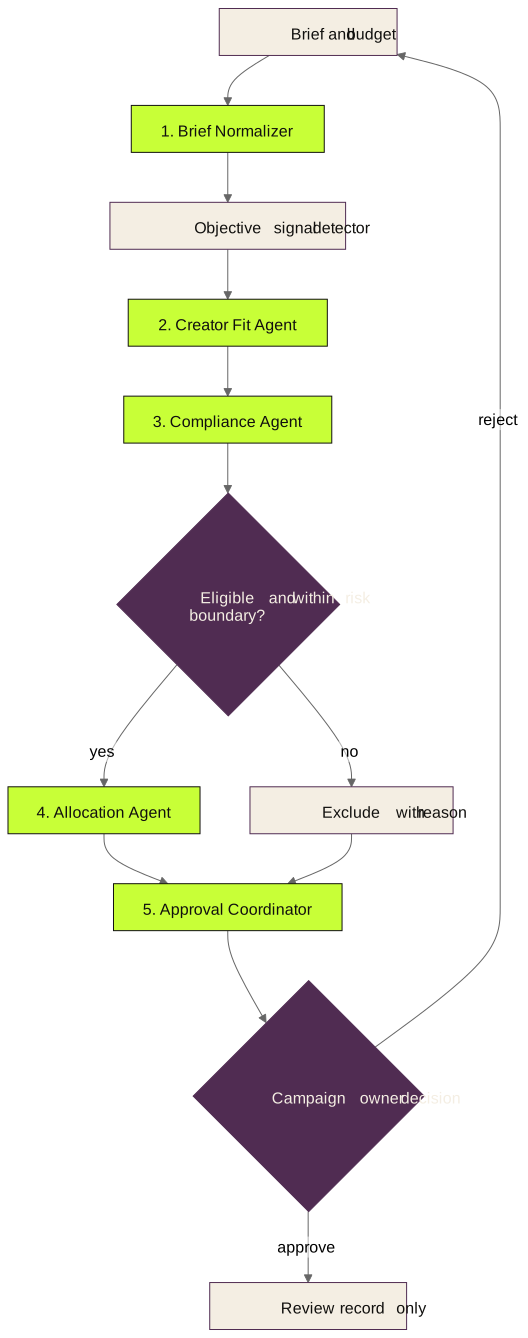
Five specialist agents qualify talent, surface risk, allocate budget, and stop at a human approval gate. No outreach. No spend. Every recommendation keeps its evidence.
02 / Council run
IDLEReady for a scenario
The full agent route, decisions, evidence, and budget allocation will appear here.
Committed -
Remaining -
Creators -
Agent route
Detected objective signals
Recommended roster
Human gateCampaign owner approval required
Built to proveTyped FastAPI contracts
Control patternBounded agent graph + HITL
Runtime proofTrace, evidence, budget
Public boundaryReplay data only
Technical case study 01Published by Ahmad Bukhari. Built and verified by AiXCEL Solutions.
Scenario brief
A campaign plan that exposes its reasoning before anyone spends.
Designed for a United States creator and talent agency scenario. A campaign owner enters an objective and budget. Five bounded roles rank talent, remove unsafe choices, allocate spend, retain evidence, and stop at approval. This is a synthetic portfolio scenario, not a commissioned client claim.
Spreadsheet decisions had no stable evidence trail.
Fit, safety, objective match, and budget were evaluated at different moments. A reviewer could see the final roster but not why it changed.
Objective-sensitive ranking plus an explicit decision gate.
The objective participates in scoring. Changing acquisition to awareness changes the ranked result. Every role emits a trace and the system records approval without contacting talent.
The public app must remain safe at zero model cost.
It uses verified synthetic replay records, rejects live-provider mode, rate-limits planning runs, and stores no client credentials.
Architecture and infrastructure
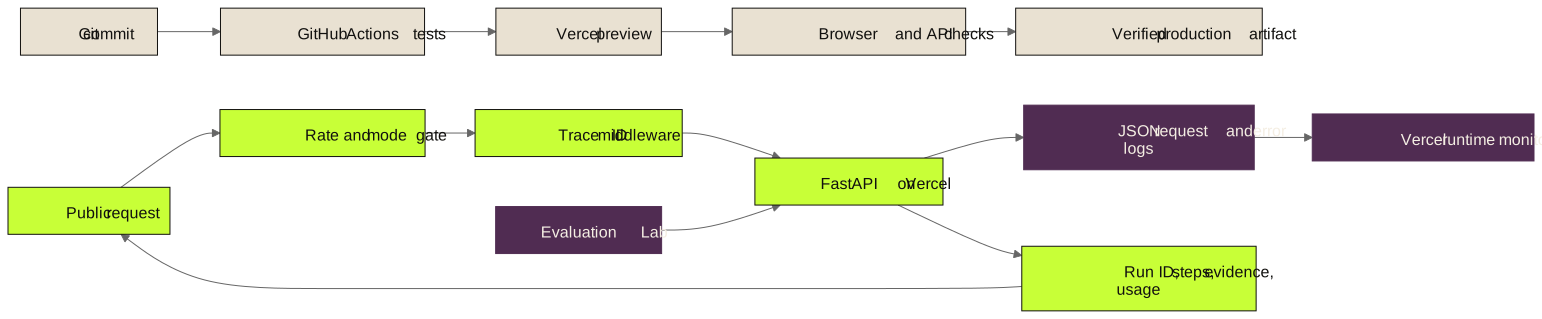
Three views, each editable.
Mermaid is the source of truth. Excalidraw, SVG, and PNG versions live in the repository.

Why this stack
Technology chosen by responsibility.
The work has state, ordered responsibilities, branching, and a pause. A graph is easier to reproduce and test.
Pydantic contracts generate OpenAPI for the browser, Postman, automated tests, and later agency adapters.
The product has a small command surface. REST is visible in Postman and easy for browser and integration teams to consume.
The public workload is short and low volume. A cluster would add cost without proving a useful operating requirement.
Short public review sessions need no retention. Authenticated tenant history is the trigger for Postgres and row-level security.
The free deployment must still respond when no model is available. A model can later explain or research, but it cannot bypass fit, safety, or budget rules.
Evaluation protocol
Golden scenarios plus black-box deployment checks.
- Typed contract and budget conservation
- Objective changes alter creator scores
- Approval required before any mutation
- Repeat key returns the same run
- Forbidden live mode returns HTTP 403
Observability now
Traceable without pretending paid tools are connected.
- X-Trace-ID on every response
- Structured JSON request and error logs
- Run ID, step traces, evidence, usage, approval state
- Vercel runtime logs and GitHub Actions
- Postman and the independent Evaluation Lab
Production upgrade gate
Add only when real traffic justifies it.
- Postgres tenant history and audit records
- OpenTelemetry export to Langfuse or LangSmith
- Sentry for application errors
- Read-only CRM adapters before write tools
- Named owner, staging UAT, rollback, and cost ceiling